The dunk
The rim isn't moving. Your number can.
Hoopers · Volleyball · Flight chasers
Most players never know theirs. The ones who do get noticed.
One jump in front of your iPhone. Flight-time math — the same method combine testing uses. No wearables, no gym, no guessing.
Measure my vertical — free ↑ Launching on Rush · therush.fun · no downloadHow to measure your vertical jump
You've tested it on rims and ceilings and older brothers' heads. Here's the proper way. (Want every method compared — wall test, Vertec, jump mat? Read the full measuring guide.)
Prop your phone, step back, jump. Slo-mo capture at up to 240 fps.
Flight time in, height out — pose tracking on every frame, entirely on your phone.
A real figure in inches, on the ladder, on the graph. Test again every week.
Straight from the app
Real screens, in order: test day, live form coaching, every move explained, and your day at a glance.
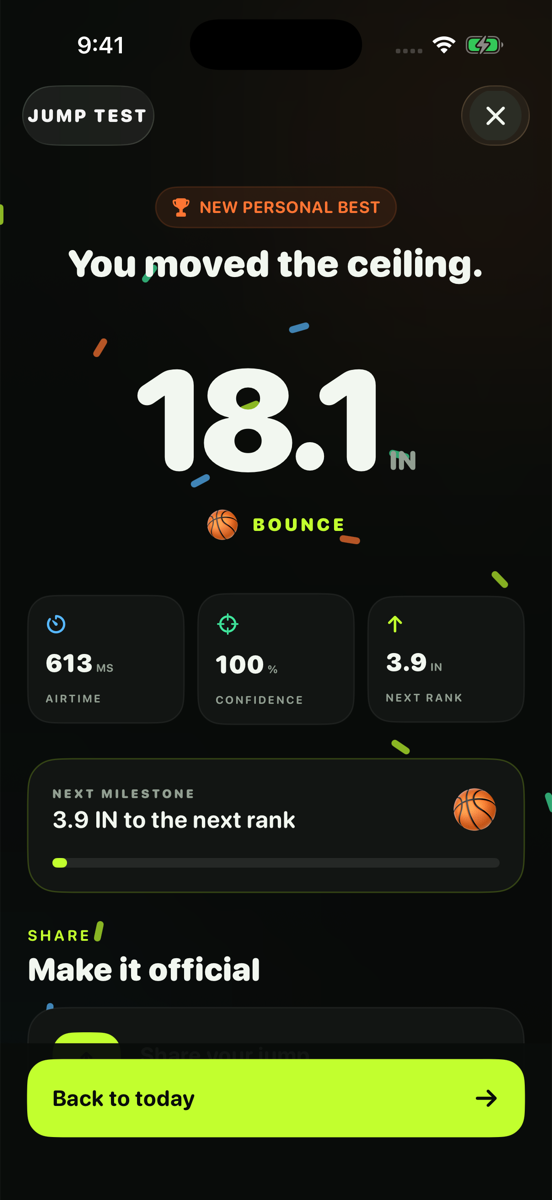
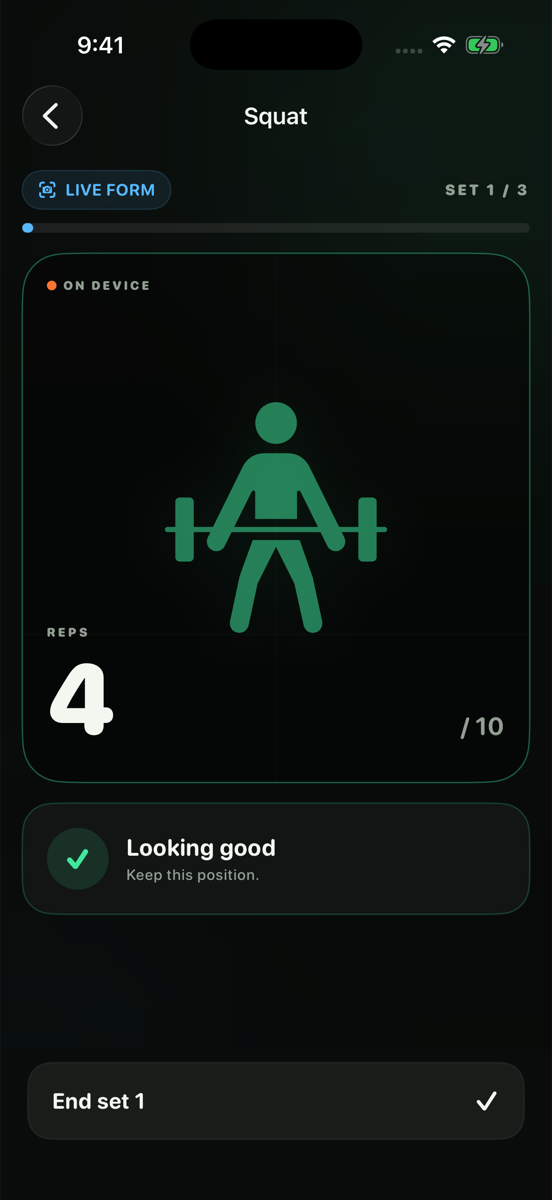
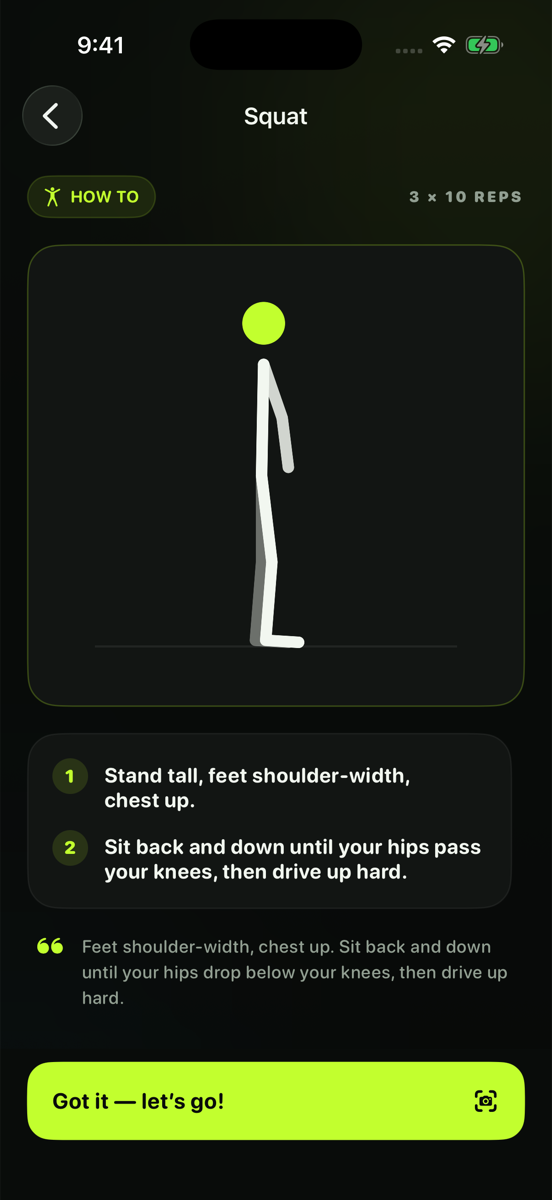
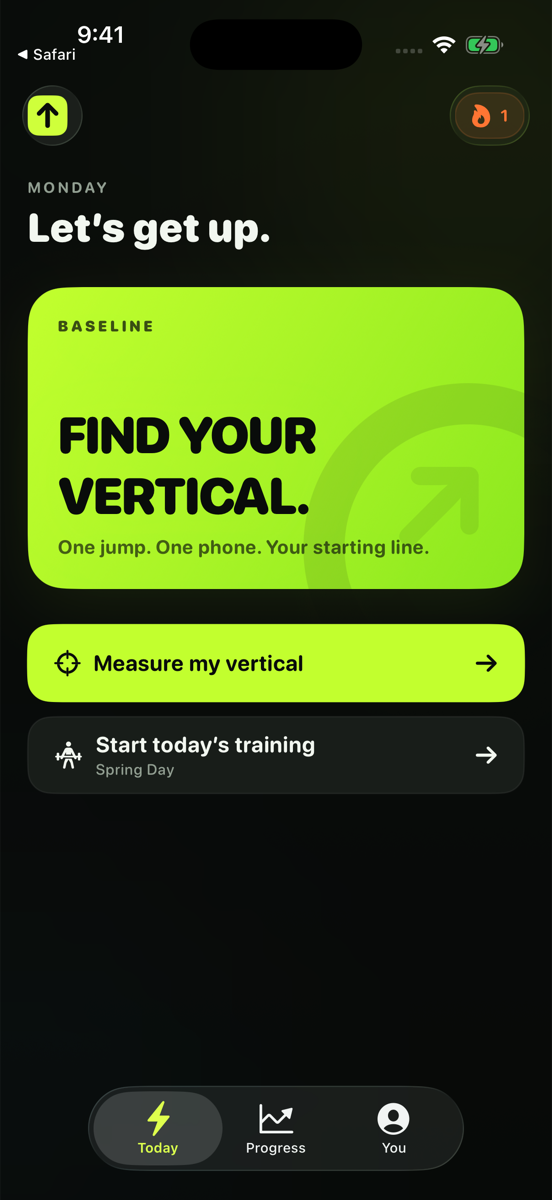
How to jump higher
Twenty focused minutes a day — squats, depth jumps, pogo hops — with the camera coaching your form live. (Curious what the science says? Read the full jump-higher guide.)
The rim isn't moving. Your number can.
Train daily. Test on Sundays. Watch the graph.
Live cues for depth and soft landings. Knees are a career.
Coaches ask for numbers. Have yours ready.
The ladder
Your first measured jump puts you on the ladder. Every rank after that is earned in inches.
Where do you land today? There's one way to find out.
The fine print, unfined
Yes, you can show this section to your parents.
Questions
The things everyone asks before their first jump.
Film one jump in slow motion. JumpHigh tracks your body frame by frame, measures the time between takeoff and landing, and converts that flight time into jump height using the same physics as professional jump mats. Everything runs on the phone. Full breakdown of every method: how to measure your vertical jump.
Flight time is the standard method behind jump mats and combine testing. Accuracy depends on frame rate and a clean takeoff and landing — JumpHigh films in slow motion at up to 240 frames per second and reports a confidence score with every measurement.
As broad reference points: many untrained teens and adults measure around 14–20 inches, trained high-school athletes often land between 20 and 26 inches, and elite jumpers clear 30+. The number that matters most is your own baseline — and which direction it's moving.
Yes. Research consistently shows that plyometric training (jumping exercises) and lower-body strength work both improve vertical jump, with the best results from combining the two over 8 or more weeks. JumpHigh's daily sessions are built around exactly those methods, with the camera coaching your form. The full breakdown: how to increase your vertical jump.
No. One iPhone propped against a wall is the whole setup — no wearables, no jump mat, no gym, no account. Your first measured jump is free.
No. Every frame is analyzed on your phone, jump clips are deleted right after analysis, and JumpHigh requires no account or sign-up.
Walk in with a number nobody can argue with.
Get JumpHigh free ↑ Launching on Rush at therush.fun — a feed of tiny apps you try, share, and remix. No app store, runs in the browser on any phone.